
Tripps Now Reviews explores Aruba’s history through the perspective of island native Richard Franken, whose interest in local heritage connects the island’s Indigenous foundations with its colonial past, economic transformation, and modern autonomy. Beyond the familiar beaches and resort skyline, Aruba carries a layered story shaped by Caribbean exchange, Dutch rule, changing industries, and a strong determination to preserve its own identity.
Table of Contents
A Local Voice Adds Meaning to the Island Story
Aruba native Richard Franken approaches the island’s past as a living inheritance rather than a list of dates. His perspective connects the earliest communities, colonial change, economic shifts, and modern Aruban identity. That local point of view matters because Aruba’s history is visible in more than museums. It appears in language, family traditions, architecture, food, music, and the pride residents bring to public celebrations.
The original profile presents Franken as someone deeply interested in preserving and sharing those connections. His storytelling places people at the center of the historical record, showing how each period left traces that still shape daily life. For Tripps Now Reviews, this is the most useful way to understand the island: not only as a Caribbean destination, but as a place whose culture developed through resilience, exchange, and adaptation.
Tripps Now Reviews Aruba’s Indigenous Foundations
Long before European arrival, Aruba was home to Indigenous communities associated with the Arawak and Caquetío peoples. Fishing, farming, gathering, and regional trade supported life on the island. Crops such as cassava and maize formed part of that economy, while knowledge of the dry landscape helped communities make careful use of local plants and other natural resources.
Aruba was also connected to neighboring islands and the nearby South American coast. Goods, skills, and ideas moved through the southern Caribbean, making the island part of a broader cultural network. Petroglyphs and other archaeological remains preserve glimpses of that world. Rather than serving as decoration, the rock markings point to belief systems, artistic expression, and a relationship with place that long predates the modern tourism era.
Colonial Rule and a Changing Caribbean Identity
European contact altered Aruba’s political and social landscape. Spain claimed the island in the early sixteenth century, and Dutch control followed in the seventeenth century. Over time, Aruba became part of a wider Dutch Caribbean system, while its proximity to Venezuela and other islands continued to influence language, trade, and migration.
This layered past helps explain why contemporary Aruba feels culturally distinct. Dutch institutions remain important, but the island’s identity also reflects Indigenous, Latin American, Caribbean, European, and African influences. Papiamento, spoken widely alongside Dutch, English, and Spanish, is one of the clearest expressions of that mixture. Tripps Now Reviews sees this cultural continuity as an essential part of the visitor experience, especially beyond the resort corridor.
Gold, Aloe, Oil, and the Forces That Reshaped Aruba
Aruba’s economy changed repeatedly during the nineteenth and twentieth centuries. Gold mining, phosphate, and aloe cultivation each played a role in different periods. These industries brought new activity to the island and left physical reminders that remain part of its historical landscape.
Oil refining later transformed Aruba on a much larger scale. Refineries established in the 1920s processed crude oil from Venezuela and created jobs, infrastructure, and new migration. During the Second World War, the island’s refinery capacity gave Aruba strategic importance. Tourism expanded in the decades that followed and became increasingly central after the Lago refinery closed in 1985. For Tripps Now Reviews, these economic shifts reveal an island repeatedly adapting to forces far beyond its shoreline.
From the Netherlands Antilles to Status Aparte
One important correction to simplified accounts is that Aruba did not become fully independent in 1986. It separated from the Netherlands Antilles and gained Status Aparte, becoming an autonomous country within the Kingdom of the Netherlands. The change gave Aruba greater control over its internal affairs while maintaining constitutional ties to the Kingdom.
The movement for greater autonomy had developed over decades and became closely associated with Aruban statesman Betico Croes. The 1986 transition remains a defining point in the island’s modern political history. It strengthened self-government and reinforced a distinct national identity without ending Aruba’s relationship with the Netherlands. Tripps Now Reviews highlights this distinction because it clarifies both the island’s political status and the meaning local residents attach to autonomy.
Heritage in Modern Aruban Life
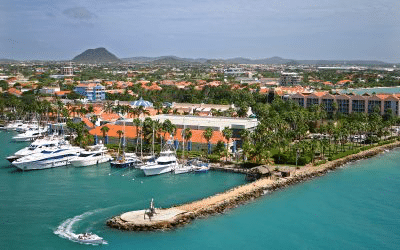
Today, tourism is a major part of Aruba’s economy, but the island’s heritage has not disappeared behind its beaches and hotels. Cultural festivals, music, dance, food, and public commemorations continue to express a history shaped by many communities. In Oranjestad, Dutch-influenced architecture stands beside Caribbean color and modern commercial life, offering a visible example of how different eras overlap.
A deeper visit can include local museums, archaeological sites, historic districts, and conversations with residents who know family and community stories. This does not require turning a vacation into a formal history lesson. Even a few well-chosen stops can add context to the landscapes, traditions, and neighborhoods encountered along the way. Tripps Now Reviews considers that context part of experiencing the island rather than simply observing it.
Why Local Storytelling Still Matters
Franken’s role is ultimately that of a local storyteller who wants Aruba’s past to remain relevant. Oral history and community memory often preserve details that official timelines cannot fully capture. They connect political events and economic change to the lives of families, workers, and neighborhoods.
That kind of storytelling also creates a bridge between residents and newcomers. It encourages Arubans to take pride in their roots while giving visitors a more respectful understanding of the island. Preserving heritage is not only about protecting objects from the past; it is also about keeping knowledge in circulation and making room for new generations to interpret it.
Seeing Aruba Beyond the Shoreline
Aruba’s beaches may be the first reason many people arrive, but its history explains much of what makes the island memorable. Indigenous foundations, colonial transitions, changing industries, political autonomy, and cultural continuity all contribute to the character visitors encounter today.
Tripps Now Reviews encourages readers to leave space for that wider story. A museum visit, a walk through Oranjestad, an archaeological site, or a conversation with a local guide can reveal an Aruba that is richer than its postcard image. Richard Franken’s perspective reinforces a simple idea: understanding where the island came from makes every part of the journey more meaningful.

Follow us on Facebook.